TL;DR
Seoul's coliving scene splits into three tiers: community-first houses where you apply like you're joining a club, branded spaces with coworking and yoga rooms, and budget sharehouses where around ₩400K gets you a bed and a kitchen. Prices run from ₩200K (goshiwon, barely a room) to ₩1.8M (premium coliving, basically a hotel with friends). No guarantor needed for any of them.
Coliving in Seoul Is Not Just Shared Housing
A sharehouse splits rent. Coliving splits life.
That distinction matters in Seoul, where the default rental system, jeonse (전세, massive lump-sum deposit) and wolse (월세, monthly rent with smaller deposit), was designed for Korean families with ₩50M sitting around. Foreigners without a Korean guarantor or a fat deposit? The system wasn't built for you.1
Coliving sidesteps all of it. Furnished rooms. Utilities included. Flexible contracts. And if you pick the right one, actual humans who know your name.
Seoul's coliving scene falls into three tiers:
- Community-first: you apply, they interview you, the house votes
- Branded: professional operators, amenities, no community curation
- Budget sharehouses: cheap, functional, social by accident
Here's what each actually looks like.
Community-First Coliving
This is the tier most people don't know exists. These aren't housing products. They're intentional communities that happen to have beds.
Seoul Nooks
Korea's first intentional coliving community, running since 2019. Fifteen-ish global citizens in Huamdong (화암동), walking distance to Itaewon and Seoul Station. Seoul Nooks won a finalist spot at the 2025 Coliving Awards for their approach.
The application is deliberately slow. Twenty-plus questions. One to two hours to complete. Then the existing community reviews your answers and interviews you. They're not checking your credit score. They're checking if you'll show up to the monthly townhall, join the Non-Violent Communication workshops, participate in the "Microcosmos" ritual where each member shares their universe.
Over 130 people have passed through since 2019. Minimum stay: two months.
PhD researchers have studied Seoul Nooks as "new ways of imagining home, identity, and belonging." That sounds academic, but the vibe is closer to a co-op where everyone actually does the dishes.
(Confession: the 20-question application probably filters out 90% of the people who'd ruin the vibe. Genius, honestly.)
Hoppin House / Digital Nomads Korea
Same organization, two faces. Hoppin House is the coliving space in Yeonnam-dong (연남동), near Hongdae. Digital Nomads Korea (DNK) is the community layer: weekly meetups, workation trips across Korea, cultural events.
The model is cohort-based. Groups of remote workers arrive together, cowork during the day, explore Seoul's food and nightlife together. Less "intentional community" than Seoul Nooks, more "structured social onramp." If Seoul Nooks is a commune, Hoppin is a summer camp for adults with laptops.
They also run seasonal workation programs in Busan and other cities outside Seoul.
Branded Coliving Spaces
These are the commercial operators. Professional, furnished, flexible. Community is a feature here, not the foundation.
EPISODE (에피소드)
Backed by SK D&D, the biggest name in Korean coliving. Six locations across Gangnam, Sinchon, Suyu, Seongsu, and Seocho. EPISODE wants ₩900K–1.8M/month for the privilege. The trade-off? Two-week minimum stays, coworking thrown in, and a deposit so low it barely counts (Nomad Stay plan). Fitness rooms, community lounges, laundry. Hotel-level finish, apartment-level timeline.
Community events exist, but nobody moves to EPISODE for the townhalls. They move for the convenience.
Local Stitch
"Creator Town" in Seogyo-dong (서교동), Hongdae's quieter neighbor. Part coliving, part coworking, part gallery space. ₩900K–1.3M/month with a low deposit and flexible terms.
The building itself is the draw: exhibition spaces, maker rooms, a ground-floor cafe. You're paying for the creative ecosystem as much as the room.
Mangrove (맹그로브)
Four locations across Seoul (Sinchon, Sinseol, Dongdaemun, Soongin). Wellness angle: 20+ communal spaces per house, yoga rooms, meditation corners. ₩600K–1M/month.
The deposit is the catch. Three to five months upfront (₩3M–5M) puts Mangrove closer to traditional Korean rentals than the "no deposit, no hassle" pitch of other coliving brands. Good for longer stays if you have the cash. Not so good if you're testing the waters.
Cove Korea
Single location in Yeonnam-dong (연남동). ₩900K–1.2M/month, no-deposit plans available on some rooms. Nothing remarkable, nothing broken. Sometimes that's the point.
Sharehouses and Budget Options
Not everyone needs a community townhall or a yoga room. Sometimes you need a clean bed, a kitchen, and humans nearby.
Borderless House
Same company that runs sharehouses in Tokyo and Taipei. The hook: every house maintains a 50/50 ratio of Korean and international residents. That's not accidental. It's the product.
- Price: ₩500K–800K/month
- No guarantor needed
If you want to practice Korean (or just not live in an expat bubble), this is the most engineered option for cultural exchange.
Shared Homies
Budget-friendly, foreigner-focused. 650+ international residents housed. No guarantor, no Korean bank account required to sign up.
- Price: ₩380K–860K/month
Goshiwon (고시원): The Floor
Originally study rooms for students cramming for civil service exams (고시, gosi). Now? Budget housing for anyone who needs a roof and nothing else.
- Price: ₩200K–400K (no window), ₩400K–800K (window + private bathroom)
- Deposit: Zero
- Utilities: Included (rice and kimchi too, usually)
The room is small. Think single bed, desk, and enough floor space to stand. Upgraded goshiwon (고시텔, gositel) add private bathrooms and windows, which pushes the price toward sharehouse territory anyway.
Who is this for? Someone arriving in Seoul with no plan, no contacts, and a need to land somewhere tonight. It's a starting point, not a destination.
Which Neighborhood, Which Vibe
Where you live shapes your coliving experience more than which brand you pick.
| Neighborhood | Vibe | Housing Type | Price Range |
|---|---|---|---|
| Huamdong / Itaewon | Intentional community | Seoul Nooks | ₩ mid |
| Yeonnam-dong / Hongdae | Creative, nightlife | Hoppin, Cove, Local Stitch | ₩₩–₩₩₩ |
| Sinchon | Student energy, affordable | EPISODE, sharehouses | ₩–₩₩ |
| Gangnam / Seongsu | Premium, professional | EPISODE | ₩₩₩ |
| Dongdaemun / Sinseol | Quieter, wellness | Mangrove | ₩₩ |
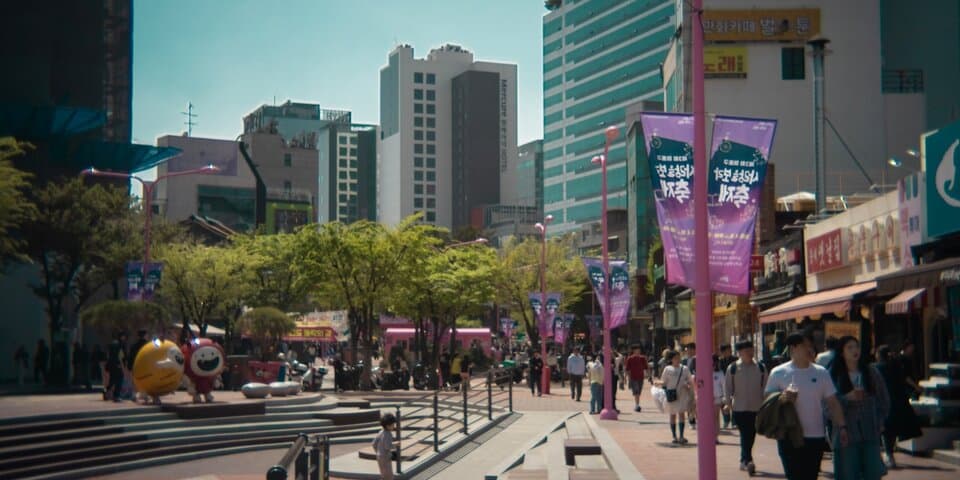
Hongdae and Yeonnam-dong have the densest cluster of options. Walkable nightlife, cafes on every corner, other foreigners around. That's your zone. For more details on each area, check the Seoul neighborhood guide.
(I spent my first month in Gangnam before realizing I could afford twice the space in Sinchon. Nobody warned me.)
The Paperwork Nobody Mentions
ARC Holders vs. Tourists
If you're on a tourist visa (B-2), most coliving spaces will still take your money. But you generally can't sign a formal lease, open a Korean bank account, or get a standard phone plan. You're essentially a long-stay guest.
If you're on an F-1-D workation visa or any other ARC-eligible visa, you need proof of residence (거소지 증명) for your Alien Registration Card. Coliving spaces and sharehouses can provide this, but ask before you book. Not all operators are familiar with the process.
The Key Money Trap
Some branded spaces advertise "low deposit" but charge non-refundable "key money" (권리금, gwolligeum) separately. Read the contract. If you see 권리금 on a coliving contract, it's typically non-refundable. Read the terms carefully and ask the operator to clarify before signing.
The ARC Catch-22
You need an address to get an ARC. You need an ARC to get a bank account. You need a bank account to pay rent. Welcome to Korea's favorite circular dependency. We wrote a whole guide on how to break the loop.
FAQ
How much does coliving in Seoul cost?
₩380K/month for a basic sharehouse bed. Up to ₩1.8M/month if you want the EPISODE premium experience. Community-first spaces like Seoul Nooks and Hoppin House sit in the ₩600K–1.2M range. Most include utilities, Wi-Fi, and furnished rooms. Goshiwon start even lower, around ₩200K. (Compared to a solo officetel lease with ₩10M+ deposit, coliving starts looking rational pretty fast.)
Can foreigners rent in Seoul without a deposit?
Yes. Goshiwon require zero deposit. Several coliving operators (EPISODE's Nomad Stay, Cove Korea, Hoppin House) offer no-deposit or low-deposit plans. Shared Homies skips the guarantor requirement too. The traditional jeonse/wolse system demands massive deposits. Coliving bypasses it entirely.
Do I need an ARC to sign a coliving lease?
For short stays, no. Most coliving spaces accept passport-only bookings. For stays over 90 days, you'll likely need an ARC, which requires a visa that permits long-term residence (F-1-D, E-7, D-8, etc.). Ask the operator about documentation before booking. Getting surprised at move-in is not the vibe.
Finding Home, Not Just Housing
The difference between "I stayed in Seoul" and "I lived in Seoul" usually comes down to one thing: did you know anyone?
Coliving won't guarantee friendships. But it puts you in a kitchen with people who also chose to be there. That's the minimum viable starting condition.
Whether that's a 20-question application to join Seoul Nooks, a cohort workation at Hoppin House, or a ₩400K sharehouse room at Borderless House. The architecture of the space matters less than whether you show up.
For the full picture on moving to Korea as a remote worker, start with the Korea digital nomad guide. Need to sort out your arrival logistics? The Korea arrival checklist covers the first 72 hours. If you're still deciding between countries, the Japan-Korea-Taiwan visa comparison can help narrow it down.
The information in this post is based on publicly available data as of April 2026. Prices, availability, and visa rules change frequently. This is not legal or housing advice. Always verify current requirements through official government sources and directly with operators before making decisions.
Footnotes
-
Jeonse deposits in Seoul average ₩200M+ for apartments. Even wolse requires ₩5M–15M upfront. The system assumes you have family wealth or a salaried job with a Korean employer. ↩