コンテンツへスキップ
tipsjapan

Japan Konbini Survival Guide for Digital Nomads (2026)

LocalNomad Team··9 min read

You'll Live at Konbini. Here's Everything You Need to Know.

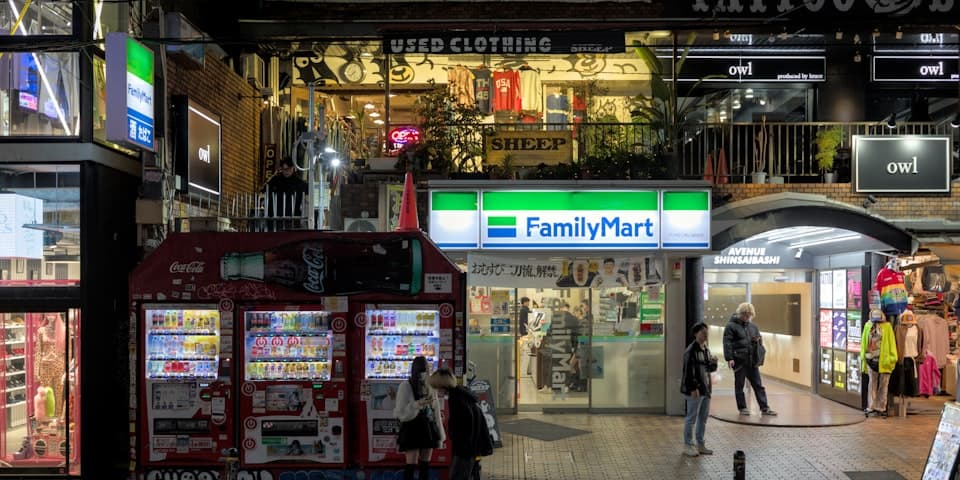
If you're spending more than a week in Japan, your local convenience store—or konbini—will become your office, your bank, your post office, and your midnight snack supplier all rolled into one. There are over 60,000 convenience stores across Japan, which means one is probably within 5 minutes of wherever you are right now.

Most digital nomads treat them as just a place to grab an overpriced drink and a riceball. They're missing out on ATMs that actually work with foreign cards, a printing service that beats FedEx, luggage services that let you move across the country with one backpack, and food cheaper than cooking it yourself. This guide covers what you actually need to know.


The Big Three: 7-Eleven, FamilyMart, and Lawson

Japan's convenience store market is dominated by three chains. They're not interchangeable—each one has a specific strength worth knowing.

ChainBest ForATM (Foreign Cards)Store CountStandout Feature
7-ElevenATMs, reliability, density✅ All cards, ¥110–220 fee~26,000Widest network, 24/7 ATMs everywhere
FamilyMartBeauty, cosmetics, quiet study spots✅ Accepts foreign cards16,000+Best makeup selection, fewer tourists
LawsonFresh food, hot meals, coffee✅ Accepts foreign cards14,000+Uchi Café coffee, premium onigiri

7-Eleven is your reliability play—widest network, fastest ATMs for foreign cards, found in every train station and rest area. FamilyMart is quieter (especially in residential areas), has better cosmetics selection, and slightly better WiFi. Lawson wins on food—Uchi Café coffee (¥100-150, better than Starbucks at half the price) and fresher prepared meals.

All three have comparable ATMs, so the choice comes down to what you need in that moment.


Cash & ATMs: The Withdrawal Strategy That Saves You Money

Japan is still a cash-heavy country, and you'll need yen to operate. The good news: ATMs at 7-Eleven, FamilyMart, and Lawson all accept foreign debit and credit cards. The standard fee is ¥110–¥220 per withdrawal depending on the time of day and your card network (daytime 7AM–7PM is often ¥110; off-hours is ¥220).

⚠️

Always choose JPY (Japanese Yen) when the ATM asks for currency. Never choose to convert to your home currency—the exchange rate will be substantially worse.

The Math That Matters: If you withdraw ¥30,000 once a week, you pay ¥880/month in fees. If you withdraw ¥5,000 every day, you pay ¥5,720/month. One strategic withdrawal per week beats daily withdrawals by roughly ¥4,840/month. Plan your cash needs accordingly.

Pro tip: If you have a Wise debit card (or similar) linked to your home country, the base exchange rate is better than most US or EU banks, which helps offset the ¥220 fee.

The ATMs at 7-Eleven and FamilyMart are available 24/7. Lawson ATMs are also reliable but occasionally have shorter hours in smaller towns. Most foreign cards work without issue, though some regional cards or older debit cards occasionally get rejected. If that happens, try a different ATM before panicking—it's usually just a fluke.


Payment Methods in 2026: A Reality Check

Japan's payment landscape has shifted dramatically in the last 2-3 years. PayPay dominance is real—it's now the default payment method at roughly 70% of retailers nationwide. If you have a Japanese phone number and a residence card, you can register a PayPay account. If you don't, you're limited to cash and credit cards.

Suica/PASMO tap cards work at almost every konbini for transit and purchases. You can buy a Suica card at major train stations (¥2,000, including ¥1,500 usable balance). They're reloadable at konbini machines.

Apple Pay works if your card is linked to a Japanese address or if you're using certain international cards. It's inconsistent enough that you shouldn't rely on it as your primary payment method.

💡

Keep ¥3,000–¥5,000 in cash at all times. Even in Tokyo and Osaka, some smaller shops and services are cash-only. It's not 1995, but it's also not 2050.

Credit cards are increasingly accepted at konbini, especially Visa and Mastercard, but contactless payment adoption is slower outside major cities. The safest bet: use cash for konbini purchases, reserve credit cards for restaurants and hotels.


Nomad Work Tools: The Printer, the Shipping, and the Services

This is where konbini become essential infrastructure for digital nomads.

Multi-Function Printers: Every 7-Eleven, FamilyMart, and Lawson has a printer-scanner-copier. Costs are ¥10–¥20 per page depending on color and size. Download the Netprint app (7-Eleven) or Lawson Pickup Service app, upload your file, get a code, walk in, and print. No account needed. Useful for visas, documents, or anything requiring physical copies. Faster and cheaper than finding a print shop.

Takkyubin Luggage Forwarding: This is a game-changer for long-term travel across Japan. You can drop off a suitcase or backpack at any konbini (usually for ¥1,500–¥3,000 per item depending on size and distance), and it arrives at another konbini or your destination 1-3 days later. This lets you explore Japan for weeks with just a day pack. Both 7-Eleven and FamilyMart offer this through Takkyubin services.

IC Card Recharging: Your Suica, PASMO, or other IC transit card can be recharged at konbini machines. Keep your transit card topped up and you avoid the awkward "insufficient balance" moment on a train platform.

Stamps, Mailing, and Package Pickup: Send postcards home, receive Amazon packages directly to konbini, or drop off packages for shipping. Most konbini have a parcel counter and stamps available. This keeps your address private if you're moving frequently.

WiFi: Most konbini offer free WiFi, but it's slow (~1 Mbps average) and usually limited to 30–60 minute sessions before requiring re-login. Don't plan work that requires reliable internet around it. It's a backup only. If you need to work seriously, find a co-working space or café.


Food Hacks: Eating for ¥800/Day

Konbini are your secret weapon for eating well on a budget in Japan. The prepared food is genuinely good, portions are honest, and the quality is consistent.

Seasonal Items matter more at Japanese konbini than most places. Winter brings oden (hot pot items: eggs, daikon, fish cakes) for ¥100–¥250 per item, available from October through March. Summer brings kakigori (shaved ice, ¥300–¥400). Spring has fresh strawberry items. Autumn has chestnut pastries. Pay attention to the seasonal rotation.

The 10PM Discount Shelf: Many konbini mark down food approaching expiration around 8PM–11PM. Discounts range from 10–50% off. You'll find bentos, sandwiches, pastries. The food is perfectly fine—it's hitting the expiration window, not spoiling. Note: not all konbini discount; some discard items at expiration instead (supermarkets are more reliable for markdowns). But when you find a konbini that does discount, it's excellent value.

Budget Protein: Boiled eggs are usually ¥150, tuna onigiri (rice ball) is ¥180–200 (prices rose slightly in early 2026), and yogurt cups are ¥120–¥180. A complete, adequate meal is: one onigiri, one salad pack (¥300–¥400), and one drink (¥150–¥200). Total: around ¥750–¥850 for lunch.

Coffee: A hot coffee at Lawson's Uchi Café or 7-Eleven's premium line is ¥110–¥150 (7-Eleven raised base prices in mid-2025). Starbucks is ¥400+. The konbini coffee is actually good. Buy it.

💡

Try the convenience store private label items—7-Eleven's "Seven Premium" and FamilyMart's "FamilyMart Collection" are higher quality than name brands and cheaper. Yogurt, snacks, and prepared foods are reliable.

For weeknight meals or travel days, konbini beat convenience food everywhere else in the world. Just don't make them your only food source—you'll miss out on real Japanese restaurants.


Hidden Services: What Most Tourists Miss

Konbini offer services that would typically require a separate shop visit elsewhere.

Concert and Event Tickets: Both 7-Eleven and FamilyMart sell tickets to concerts, theaters, museums, and sports events through Ticketmaster Japan or their proprietary systems. You can reserve online and pick up at the counter, or buy directly at the kiosk. Prices are often lower than buying online, and you avoid international payment issues entirely.

Bill Payment: Utilities, phone bills, internet bills—bring your statement, hand it to the counter staff, and pay in cash. No online account needed, no fumbling with Japanese banking apps.

Package Pickup: Amazon, Rakuten, and other retailers let you redirect packages to your nearest konbini instead of your actual address. Useful if you're moving frequently or don't want to give out your residence.

OTC Medications: Aspirin, cold medicine, stomach medication, and allergy relief are available without a prescription. Pointing at symptoms and showing your phone gets you there.


Quick Reference Cheat Sheet

Service7-ElevenFamilyMartLawson
ATM (Foreign Cards)✅ Best, ¥110–220✅ ¥110–220✅ ¥110–220
Food QualityGoodGood⭐ Best
CoffeeGood, ¥100–¥150Good, ¥100–¥150⭐ Uchi Café (best)
Cosmetics SelectionOkay⭐ BestOkay
Multi-Function Printer✅ Netprint app✅ Easy setup✅ Available
Store Density⭐ Highest (~26,000)Large (16,000+)Large (14,600+)
Luggage Forwarding✅ Takkyubin✅ Takkyubin✅ Takkyubin
WiFi Speed~1 Mbps~1 Mbps~1 Mbps
Ticket Booking✅ Ticketmaster✅ Ticketing❌ Limited
Open Hours24/7 (most)Usually 24/7Usually 24/7

For broader context on visas, housing, and regional differences, see the Japan Ultimate Digital Nomad Guide.


This guide reflects published information and common practices as of March 2026. Specific services, fees, and availability vary by location and may change. Always confirm current details with staff or official websites before relying on specific services. This is informational content, not professional advice. For visa, tax, or legal questions, consult official Japanese immigration or legal resources.