TL;DR
China has no digital nomad visa. The Great Firewall blocks Google, Slack, and WhatsApp. WeChat runs your entire life. And yet: $1,000/month all-in costs in Dali, mass transit that puts most countries to shame, and a scale of daily life that rewires how you think about cities. This guide covers what actually works for remote workers in 2026: visas, firewall workarounds, payment setup, and five cities worth considering.
The Honest Reality Check
China is not a soft landing.
There is no digital nomad visa. Remote workers on tourist entries occupy a gray area. Enforcement targets illegal local employment, not someone on a Zoom call at Luckin Coffee, but the legal footing is shaky. You will not find a government webpage that says "come work remotely here." That page does not exist.
Then there's the Great Firewall (防火长城, fánghuǒ chángchéng). Google, Gmail, Slack, Notion, WhatsApp, Instagram: all blocked. Every morning starts with checking whether your VPN still works. Some days it does not. Your backup VPN becomes your primary, and you start shopping for a third.
WeChat (微信, wēixìn) is not optional. It is your wallet, your messaging app, your food delivery portal, your ride-hailing service, your government registration tool, and your social network. Rolled into one app. If your WeChat account gets restricted, your daily life stops.
English? Shanghai has enough. Beijing has some. Everywhere else, you need Mandarin or a very high tolerance for pointing at screens.
So why come?
Because $1,000 a month buys a full life in Dali: rent, food, coworking, weekend hikes to mountain lakes. Because the high-speed rail network connects 50,000+ km of track at 350 km/h. Because Shenzhen hardware markets let you prototype an idea in 48 hours. Because 1.4 billion people built a parallel digital ecosystem that works differently from anything you have used before, and spending time inside it changes how you think about technology.
China is not for everyone. If you need predictable internet and English menus, Japan, Korea, or Taiwan are easier starting points. But if you want the steep end of the learning curve, keep reading.
Visa Situation: What Actually Works
China has no digital nomad visa program. Remote workers typically enter on one of these:
30-day visa-free entry. As of 2026, citizens from 50 countries (including most of Europe, Australia, New Zealand, Canada, and the UK) can enter without a visa for up to 30 days. Extensions are possible at local Public Security Bureau (PSB) offices, but not guaranteed. This is the most common path for short stays.
240-hour transit visa exemption. Available at 65 ports of entry across 24 provinces, including major airports (Shanghai, Beijing, Guangzhou, Chengdu), land border crossings, and seaports (expanded November 2025). You need a confirmed onward ticket to a third country. Useful for testing the waters on a shorter trip.
Z-Visa (Work). Employer-sponsored, typically 1 year. The legitimate path if you find a local employer or transfer within a multinational. Requires a work permit, health check, and degree authentication. Applications go through the COVA online visa platform (launched September 2025).
R-Visa (Talent). 5–10 years for high-level professionals in STEM, education, or other priority fields. Requires institutional sponsorship (a Chinese organization applies on your behalf), but not employer-driven like the Z Visa, but the bar is high: think published researchers and senior engineers.
Working remotely for a foreign company on any tourist or transit entry is not explicitly authorized. Enforcement focuses on people taking local jobs without permits. Proceed with eyes open.
Note
Based on published requirements from China's National Immigration Administration. Visa policies change frequently. Verify current rules before booking flights. This is not legal advice.
The First 48 Hours
Your first two days set the tone for everything after. Get these steps right before and immediately after landing.
Before boarding:
- Install two VPN apps (you cannot download them once inside China)
- Activate an international eSIM (the QR code will not load behind the firewall)
- Download WeChat and verify your account with an international phone number
- Save offline maps (Google Maps will not work; download Amap/高德地图 too)
- Test VPN + eSIM on airport wifi before takeoff
After landing:
- Connect to your eSIM immediately after clearing immigration
- Exchange a small amount of cash (500–1,000 RMB) at the airport, as some taxi drivers and vendors still need it
- Register at your local PSB within 24 hours (hotels do this automatically; Airbnb hosts sometimes do not)
For the full step-by-step arrival sequence, including PSB registration and SIM card setup, see our China Arrival Checklist. For WeChat account setup, verification, and mini-programs you will actually need, see the WeChat Ecosystem Guide.
Surviving the Firewall
This is the part that breaks people.
What is blocked (partial list):
- Google (Search, Gmail, Drive, Maps, Workspace, YouTube)
- WhatsApp, Telegram, Signal
- Facebook, Instagram, X/Twitter
- Slack, Notion, Figma (slow/unreliable)
- ChatGPT (blocked; sometimes accessible with VPN, sometimes detected)
What works without VPN:
- WeChat, Alipay, Taobao, JD.com
- Baidu (search), Amap (navigation), Meituan (food delivery)
- GitHub (usually), Zoom (usually), AWS console (laggy)
VPN: tolerated, not legal. China's Cybersecurity Law restricts unauthorized VPN use. In practice, foreign tourists and residents using VPNs for personal access face zero enforcement. No foreigner has been prosecuted for personal VPN use. But VPN providers get blocked regularly. Protocols that worked last month may not work today.
The move: install two different VPN providers before you arrive. Test both. Write down login credentials on paper (if the app crashes and you cannot re-download it, you need those). Budget for 20–40% slower connection speeds when connected through VPN.
The eSIM trick. International eSIM providers (Airalo, Holafly, SimOptions) route traffic through servers outside China. That means Google, Gmail, and WhatsApp work without any VPN, just through your eSIM data connection. Cost runs $4–10 USD for 1–2 weeks. Slower than local carriers and more expensive for long stays, but invaluable as a backup when your VPN goes down.
For provider comparisons, protocol recommendations, and troubleshooting when everything breaks, see the Great Firewall & VPN Guide.
Money Without a Bank Account
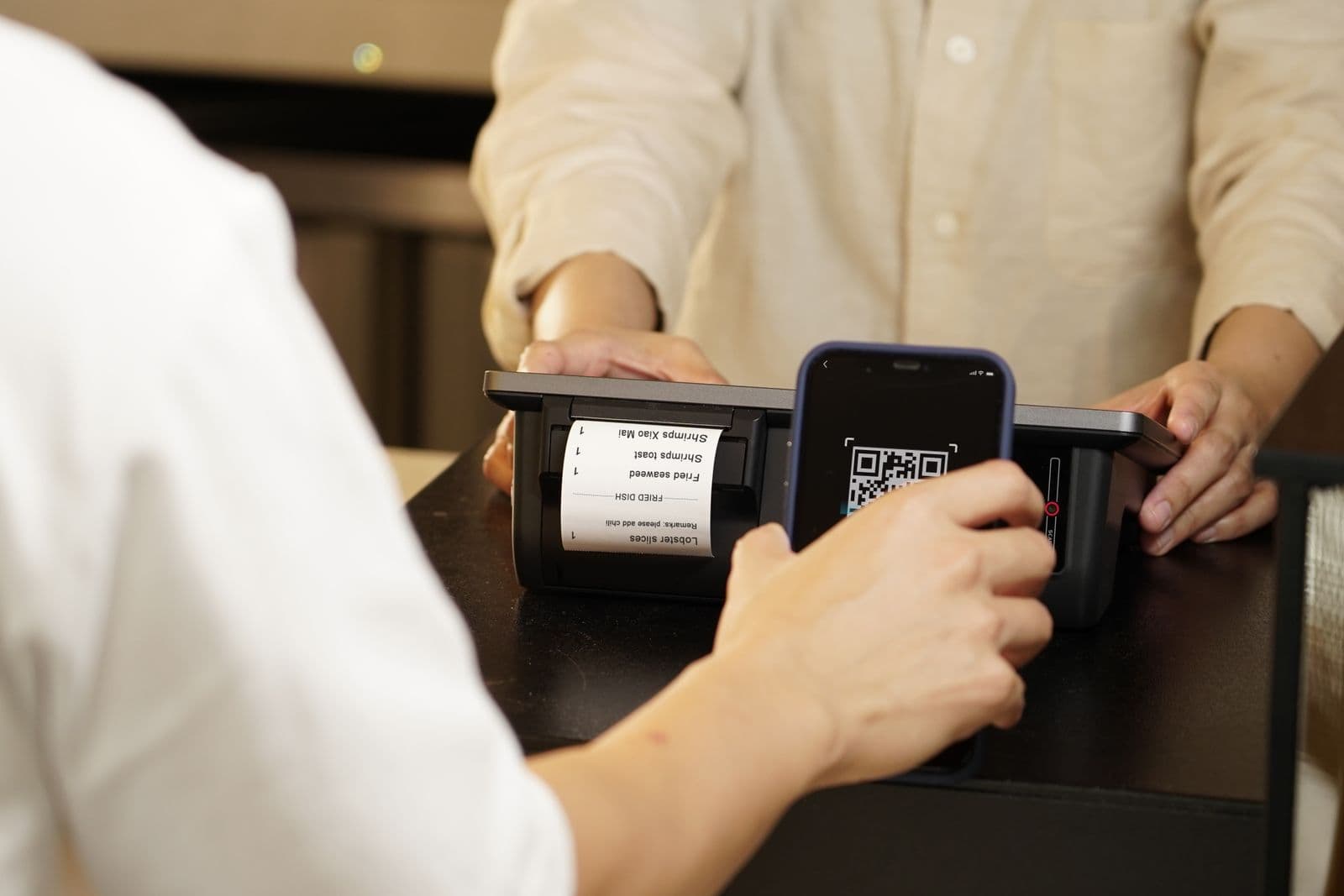
China runs on mobile payments. Cash is technically legal tender, but in 2026, many shops and restaurants in tier-1 cities do not handle it smoothly.
WeChat Pay and Alipay both accept international cards now. Visa, Mastercard, and American Express all work. Setup takes about 10 minutes per app. WeChat Pay caps single transactions at ¥6,000 and monthly spend capped at ¥50,000; annual total capped at ¥60,000 without a Chinese bank account. Alipay (after passport verification) allows up to $5,000 USD per transaction and $50,000 USD per year, higher limits than WeChat for most foreigners. Alipay also offers a 180-day TourCard for short-term visitors (no bank account needed).
The catch: linking your international card sometimes takes 1–2 days for verification. Do this before you arrive if possible, or immediately after landing. Test your first payment at an airport convenience store before you leave the terminal.
Cash still matters in specific situations. Street market vendors in tier-2 and tier-3 cities. Old-school restaurants. Taxi drivers who are not on DiDi. Exchange 500–1,000 RMB at the airport. Major banks (ICBC, Bank of China, CMB) have currency exchange at most branches.
Opening a Chinese bank account unlocks higher payment limits (500,000+ RMB) and makes daily life smoother. You will need a valid passport, proof of address, a Chinese phone number, and a work or student visa. Tourist visa holders usually cannot open accounts.
For the full setup walkthrough (card linking, tour passes, Sesame Credit, and what to do when payment fails), see our Alipay & WeChat Pay Foreigner Guide.
Where to Base: 5 Cities
| City | Monthly Cost | Internet | English Level | Best For |
|---|---|---|---|---|
| Shanghai | $1,200–1,900 | GFW + VPN | 3/5 | First-timers, networking, international community |
| Beijing | $1,400–2,100 | GFW + VPN | 2/5 | History, politics, autumn photography |
| Shenzhen | $1,100–1,600 | GFW + VPN | 2/5 | Hardware, startups, Hong Kong day trips |
| Chengdu | $900–1,300 | GFW + VPN | 1.5/5 | Budget living, food culture, laid-back pace |
| Dali | $800–1,000 | GFW + VPN (spotty) | 1/5 | Ultra-budget, nature, nomad community |
Shanghai (上海) is where most people start. Largest expat community in China (200,000+ visa issuances, not resident population), the most English-friendly city, and coworking options from budget (Luckin Coffee at 15–25 RMB/cup) to premium (WeWork at 3,000–5,000 RMB/month). French Concession for tree-lined streets and coffee. Jing'an for central access. Hongkou if you want cheaper rent and an emerging creative scene. The downside: Shanghai costs roughly twice what Chengdu does, and the pace is relentless.
Beijing (北京) runs on history and political gravity. Autumn here (late September through October) is genuinely spectacular. Clear skies, mild temperatures, golden light on the Forbidden City. Winter is the opposite: smog, AQI regularly above 150, and heating pollution that settles over the city. Chaoyang district has the highest expat density. Haidian is the university and tech zone. Budget runs $1,400–2,100/month.
Shenzhen (深圳) is 40 years old and built from scratch. The energy feels like early-stage startup culture applied to an entire city. Nanshan district is where the tech companies cluster. Shekou has beach access and a more relaxed expat vibe. The real draw: Hong Kong is one hour away by train, which solves banking, SIM cards, and weekend escapes. Lowest coworking costs among the tier-1 cities.
Chengdu (成都) is the value play. Rent is 50% of Shanghai. The food scene is one of China's best (Sichuan cuisine, 火锅/huǒguō everywhere). The pace is slower. English is limited, so basic Mandarin or strong translation-app skills help. Growing nomad community and a startup ecosystem that is small but genuine. Budget: $900–1,300/month.
Dali (大理) is the outlier. A mountain town in Yunnan province, surrounded by lakes and ancient architecture. The established digital nomad community runs monthly meetups, skill-shares, and hiking groups. Coworking spaces start at 500 RMB/month ($70). Total cost of living: $800–1,000/month all-in. The tradeoff: English is almost nonexistent, internet quality varies, and getting there requires a flight to Kunming plus a 2–3 hour bus or train. But for the price and the setting, nothing else in China comes close.
Who Should (and Shouldn't) Go
Good fit:
- You want low costs and are willing to trade convenience for them
- You are building something related to China (market research, hardware, supply chain)
- You have basic Mandarin or are willing to learn
- You find friction interesting rather than exhausting
- You have tried easier destinations and want a challenge
Bad fit:
- You depend on real-time Google Workspace collaboration
- You need reliable video calls at consistent quality
- English-only is non-negotiable for daily life
- You want a legal framework that explicitly permits remote work
China is a hard-mode destination that rewards preparation and patience. Start with the satellite guides linked above, get your VPN and WeChat sorted before you fly, and give yourself permission to be confused for the first week.
It gets easier. Not easy. Easier.
Questions about living and working remotely in China? Join the conversation on our community page or check the cross-country comparison if you are still deciding between destinations.